
Happy Endings
Dancing with life

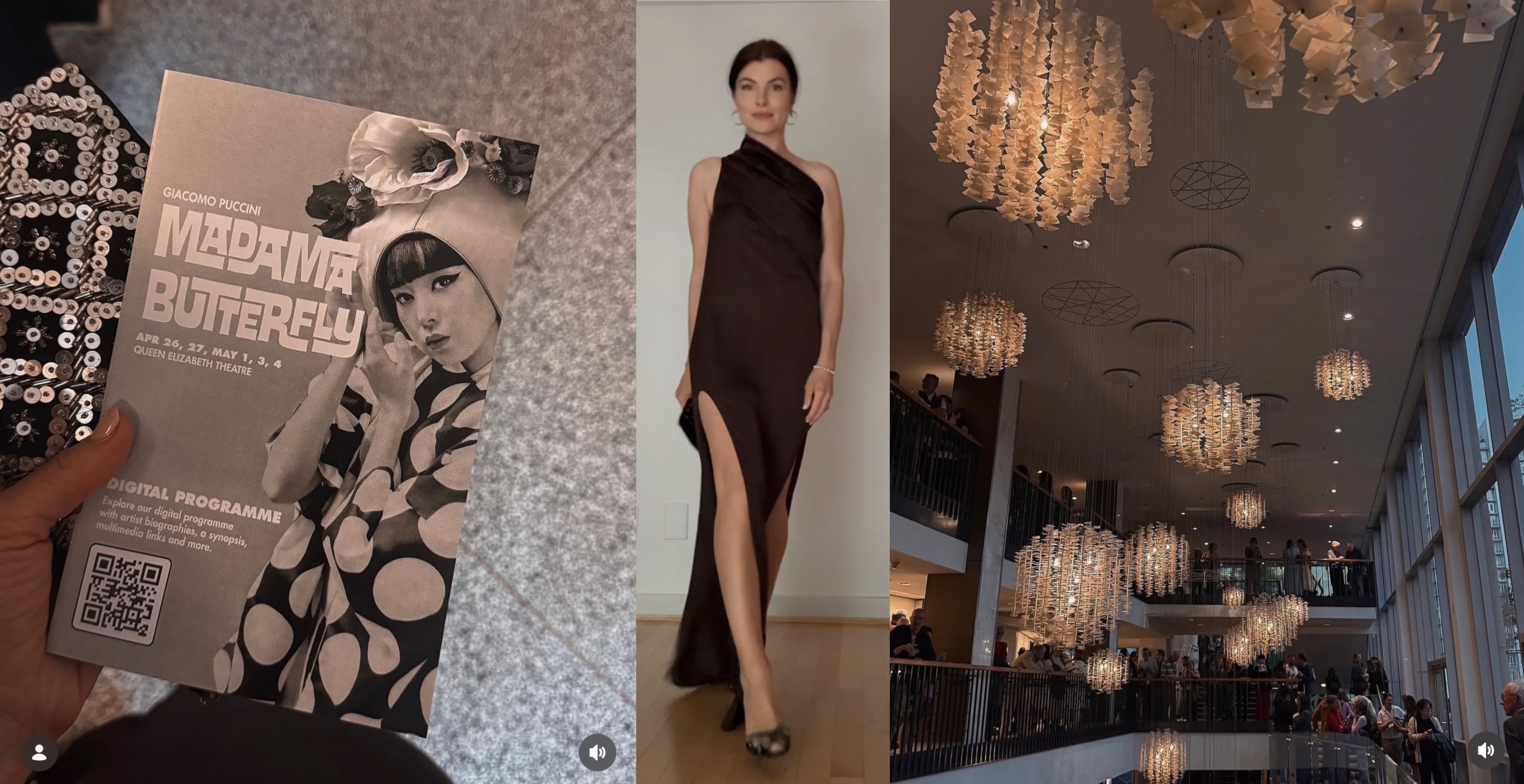
Last year, after seeing Madama Butterfly, I posted this on Instagram, about our attachment to happy endings, about the way we are taught, so early and so subtly, to believe that life will somehow respond to us according to the goodness we bring to it. That if we love purely, we will be loved purely in return. That if we stay loyal, we will somehow be protected from getting hurt. That if we live sincerely, life, the Universe, God, or whatever you believe in will notice, and spare us at least some cruelty.
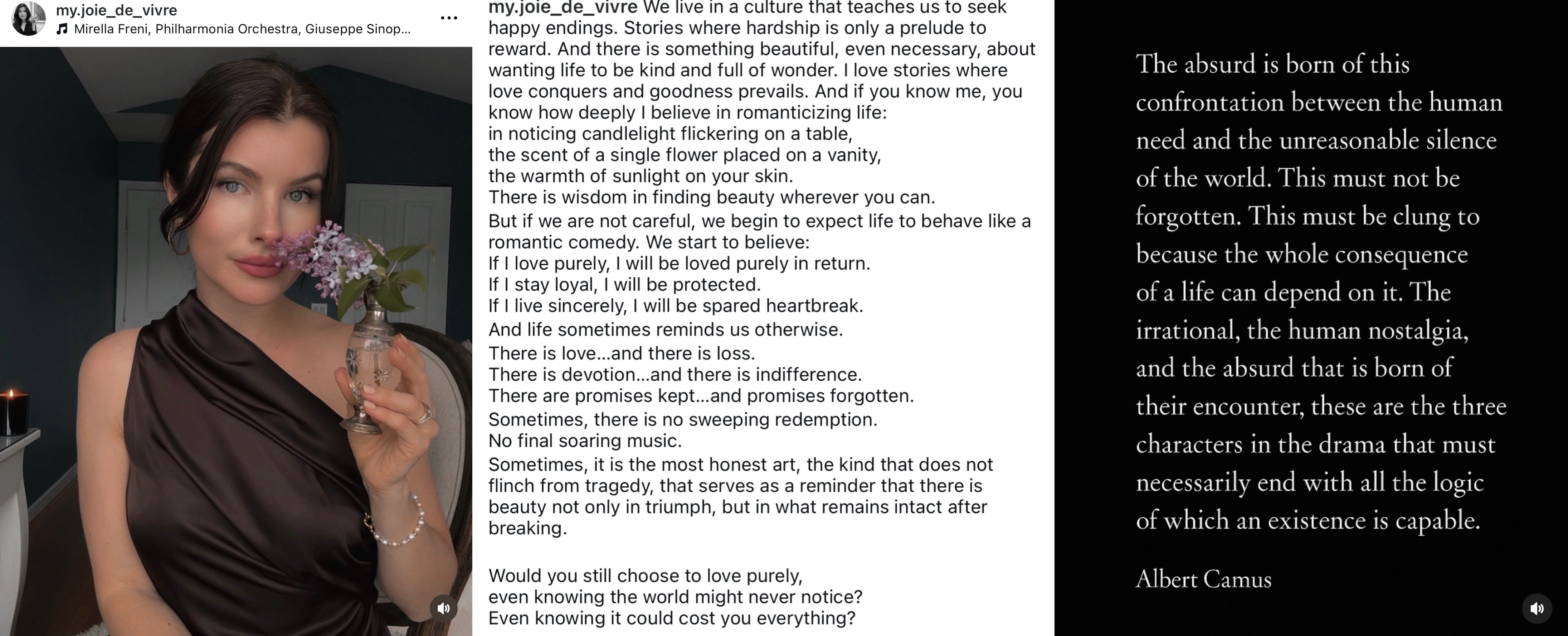
I understand that longing. I really do. Part of me still lives there. I still believe in romanticizing life. I still believe in candlelight flickering on the dinner table, in the scent of a single garden rose placed on my vanity, in sunlight warming my skin, in all the small ways I can make my life feel beautiful. I do believe there is great value in that, in refusing to become numb. There is value in creating a certain atmosphere, in noticing what is tender, in making room for wonder, for whimsy, for beauty.
But beauty and illusion are not the same thing. And I think one of the hardest illusions to let go of is the idea that life should be fair. Not fair in the abstract, not in the way people argue about fairness in public life, legally or politically. I am referring to fairness in our private life. We want life to be emotionally fair. Morally fair. We want it to make sense. We want love to be met with love. We want sincerity to count for something. We want to believe it will be rewarded. We want innocence to be protected and safe. We want devotion to matter. We want to believe that if our intentions are good enough, then the ending, somehow, will be kinder to us.
But life does not always move according to those terms. Camille Paglia, in her book Sexual Personae, writes: “Civilized man conceals from himself the extent of his subordination to nature. The grandeur of culture, the consolation of religion absorb his attention and win his faith. But let nature shrug, and all is in ruin. Fire, flood, lightning, tornado, hurricane, volcano, earthquake—anywhere at any time. Disaster falls upon the good and bad. Civilized life requires a state of illusion. The idea of the ultimate benevolence of nature and God is the most potent of man’s survival mechanisms. Without it, culture would revert to fear and despair.”
This is part of why I return to opera and classic literature with stories of tragedy. These works do not reassure us that goodness and reward always come together. There is no pretending that love is always enough to save us, or that purity of feeling guarantees purity of response. All of these tragic stories show us that there can be love and loss, devotion and indifference, beauty and devastation, all living side by side in the same human story. These worlds are never simply black and white, with black and white actions and consequences. All of life is just different shades of gray.
And that may be hard to bear for some, because I think many of us walk through life with an unspoken belief that reality should, at some point, correct itself. That the good should prevail, that what is unjust should eventually be brought to justice. That if we have loved well, life will not let that be wasted.
But what if life does not work that way?
What if fairness, at least in the way we cling to it, is not a promise built into existence?
I think this is part of why I am drawn to writers like Dostoevsky and Tolstoy, to works like Steinbeck’s East of Eden, and of course, to opera. These authors and these works do not offer a childish world, where people are divided neatly into the good and the bad, the deserving and the undeserving, and then given outcomes accordingly. They understand that human beings are far more mixed than that. Vanity, innocence, longing, cruelty, self-deception, devotion, fantasy, and despair can all move through the same person, sometimes in the same hour.
I do not believe people are as transparent, even to themselves, as we would all like to believe we are. We are not as pure as we imagine when we feel wronged, and not as rational as we imagine when we defend ourselves. We are contradictory creatures. We want noble things and foolish things. We sabotage what we love. We place too much meaning on people and situations, then feel wronged when reality fails to deliver what we expected of it. We mistake wanting something deeply for a sign that it was meant to be. We project. We cling. We are often driven by old wounds we may not even be aware of. We hurt others while telling ourselves a gentler story about why.
And then we are shocked when life does not unfold according to the moral logic we expected.
That could be one of the reasons it all feels so unfair sometimes. Because we expect a world governed by reason and moral symmetry, while living among human beings who are only partly reasonable, only partly self-aware, and only partly in command of themselves… you and I included.
Camille Paglia is one of the few writers who states plainly that beneath culture, refinement, and principle lies something older and far less easy to control. Something elemental, bound up with nature, the body, sex, fear, power, instinct, irrationality, and fate. We like to think we are guided by our values alone, but so much of human life happens lower down than that, in the unconscious, in appetite, in terror, in longing.
That is not to say we should lower our standards, or stop caring about goodness. I am only saying we should stop expecting goodness to function like a bargain, because maybe goodness was never meant to be a strategy for earning a reward.
Maybe goodness is simply a way of being in the world, of remaining whole even when life does not go the way we hoped. A way of not letting disappointment make us ugly. Maybe goodness is just a way of continuing to choose tenderness, dignity, and truth even when there is no applause for it, no guarantee attached to it, no neat or morally just ending that comes along to explain why it was all worth it.
That feels, to me, much closer to wisdom: deciding not to become small even when life is unfair.
There is a strange sense of freedom in letting go of the fantasy that love will save us from loss, and still being willing to love without demanding that it serve as insurance against suffering.
And there is freedom in letting go of the expectation that the world will mirror back our values, and still living by them anyway.
Would you still choose what is beautiful and good if you knew there would be no guaranteed protection in it? Would you still choose sincerity if your sincerity brought no special reward? Would you still keep a pure heart in a world that does not always notice, does not always care, and does not always return what you give?
I believe these are the better questions to ask in place of whether life is fair or not.
Fairness keeps our attention on what the world owes us, but when we stop asking what life should have given, and begin asking what kind of person we will remain in spite of what it did not, that is what builds our character.
What is a good life, exactly?
Nobody is guaranteed happiness. Nobody is guaranteed meaning, or peace, or even the kind of life they imagined for themselves.
What may happen, will happen. People will sometimes disappoint you. Seasons will change. Loss will arrive in one form or another. Life will not always consult your preferences before it alters its course.
But there is still something in your hands.
You can decide how you meet a day, and you can decide what kind of mood surrounds your life. You can decide whether your hours feel fractured and depleted, or inhabited. You can decide whether you rush past your own existence, or participate in its dance.
This is partly why I have come to care less and less about happiness as a goal. I have written on this before. Happiness is too elusive, too temperamental, too dependent on too many conditions. I choose wholeness. Wholeness feels different. Wholeness is steadier and asks for presence, not necessarily pleasure. It is less about whether life is giving me everything I want, and more about whether I am living in a way that gathers me back into myself. For me, wholeness is the feeling that I am where I need to be, doing what I know, deep down, I am meant to be doing.
And in that spirit, here are a few practical ways I think we can bring more wholeness into ordinary life. You will notice that this list is not about grand transformations, but just small choices that make a day feel more inhabited:
Look at the sky before a screen. Let something larger than your own mind greet you first.
Linger in bed for a moment. Stretch slowly. Arrive in your body before the day begins asking things of you.
Put on Mozart in the morning.
Read a page of philosophy or poetry before social media. Begin with something that deepens you, not something that scatters you.
Have freshly squeezed orange juice at breakfast. Especially in a crystal glass.
Choose audiobooks over podcasts sometimes. It is a different rhythm, requiring a different kind of attention.
Keep classic literature close to remember that human nature is older and stranger than the internet suggests.
Walk after meals. Even ten quiet minutes around the block is enough to cause a shift.
Go to the local market and when you get home, cook a wholesome meal from scratch. There is something deeply nourishing in choosing ingredients and turning them into a meal, not just the meal itself.
Eat outside when the weather permits. Even simple food feels more alive in the open air, especially on a bright and sunny day.
Sit down properly for dinner. Not in front of a screen. Not while doing three other things.
Linger after the meal. Good conversation on full bellies is one of life’s great pleasures.
Use your best china. Not someday. Now.
Eat dessert. Pleasure has its place in a wholesome life.
Light candles in the evening. A softer way to enter the night.
Take baths. A way of returning to yourself after the world outside demands so much of you.
Stretch before bed. One small act of care for the body that carried you all day.
Make time for contemplation. Tea in silence. Journaling. Meditation. Prayer. Whatever gathers you inward.
Make time to do absolutely nothing. Lie on the deck. Sit on a bench. Watch the water. Let the mind settle.
Listen to old vinyl. Music lands differently when you give it your full attention.
Have movie nights at home. Lights off. Popcorn made. Phones away.
Play board games with people you love. Something simple and human and unnecessary in the best way.
Call a friend. Not texting. Not voice notes. A real conversation with time inside it.
Have tea at a small local café. With a friend, or alone with a book, or alone with your own thoughts.
Keep lunch dates sacred. Phones off the table. Presence is part of the meal.
Cuddle your pet. A small return to warmth and softness.
Grow herbs. Keep houseplants. Let something living depend on your care.
Choose beautiful textures, fabrics, and scents. On your body and in your home. These things shape us more than we admit.
Give yourself a foot massage or a scalp massage. Or trade one with your husband or wife. A little tenderness, daily.
Book the massage. Book the acupuncture. Support is not indulgence when it helps you inhabit your life better.
Go to the opera. Go to the ballet. Let yourself be shaped by something finer than ordinary entertainment.
Visit a gallery or museum on an ordinary day. Especially on a rainy afternoon, or a quiet lunch break.
Take day trips to nearby towns. A small change of setting can restore something in you.
Be a tourist in your own town. There is often more beauty near us than we know how to see.
Sign up for workshops that genuinely interest you. Painting, pottery, tea, incense, perfumery, gardening, baking, chocolate. Curiosity makes a life feel richer.
None of these things will spare you from sorrow. That is not what they are for. But they may help you build a life that feels more lived in and textured and more human, a life that does not depend entirely on outcomes in order to feel worthwhile.
What may happen, will happen, but at least you can say you were here for your life while it was happening.
I still love stories where love conquers and goodness prevails. I still want life to be kind. I still feel the pull of that old longing.
But I do not believe that a good heart is a contract with fate. A good heart does not guarantee that you will be spared. It guarantees only that when life reveals itself to be indifferent, unfair, or cruel, you do not become indifferent, unfair, or cruel along with it.
To me, that is what goodness has always been.
I have always thought of life as a dance. We do not choose the music, or the timing, or every turn it takes. But we do choose whether we will participate, or remain on the sidelines. We can stand at the edges of it, arms folded, bitter that it did not move to our liking. Or we can choose to participate anyway. We can choose to bring our own beauty to it.
As for me, I would rather add lilacs to the room, put on my favourite silk gown, and dance without losing my grace.
Until next time,
Mihaela
PS: something I have written related to this, on choosing wholeness over chasing happiness (I removed the paywall for now, since I have an automatic paywall on anything older than two months):

This was a delight to read! I deeply resonated with the moving away from looking for fairness and justice from the world to allowing what is and still doing whatever we can to experience beauty everyday in the mundane and the extraordinary ♥️🙏